

Christa Pike, Child Rape Victim, Faces Execution for Crime She Committed as a Teenager


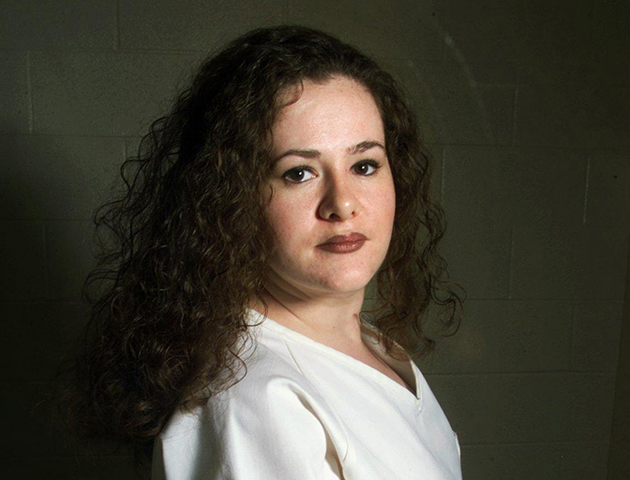


Take Action for Christa
- Sign Christa’s Petition Here
- Visit Mercy for Christa to Learn More
Case Background
When Tennessee sentenced Christa Pike to death on March 30th, 1996, for a crime she committed as an eighteen-year-old, she became the youngest woman to receive a death sentence in the modern era. As the judge sentenced her to die, Christa—her face still sprinkled with adolescent acne—sobbed uncontrollably and called out for her mother. If the State carries out her execution, it will be the first time Tennessee has executed a woman since 1819.

Growing up, Christa suffered an “almost unbearably abusive background,” according to Dr. Jonathan Pincus, Professor of Neurology at Georgetown University. A victim of child sexual abuse, multiple rapes, and parental abandonment and neglect, Christa first attempted to take her own life when she was twelve. When she was seventeen, a stranger grabbed her by the side of the road, threw her down, and violently raped her. The police never arrested him. Without treatment or support, she was forced to navigate both the consequences of her child rapes and the symptoms of untreated mental illness. Nearly a year to the day after the rape, Christa and two other teenagers killed Colleen Slemmer. One of those teenagers was Christa’s boyfriend, Tadaryl Shipp—a boy she loved even after he hit, kicked, and threatened her with a razor blade.
Christa is now 50 years old. She is not the same person she was at the age of eighteen. Medical research conducted over the last two decades has established that the juvenile brain does not fully develop until a person is in their mid-20s. Yet Christa was sentenced to die, while Tadaryl, who was only a few months younger than she at the time of the crime they committed together, was not. The disparate treatment they received is based on Tennessee law that excludes “juveniles”—defined as anyone under the age of 18—from capital punishment. Yet neuroscientists now know that there is no meaningful difference in brain development between a seventeen-year-old and an eighteen-year-old.
Christa has always accepted responsibility for her role in Colleen Slemmer’s death. At the same time, her involvement in the crime cannot be separated from her youth and her history of child sexual abuse, rape, brain impairment, and severe mental illness. Dr. Bethany Brand, a clinical psychologist with over three decades of specializing in the assessment and treatment of trauma-related disorders, described Christa’s history as “extraordinarily severe extreme trauma.” According to Dr. Brand, Christa “experienced more severe adverse events than 99% of the US population.”


Christa was born with brain damage brought about by her mother’s use of alcohol during pregnancy. From infancy, she suffered seizures, and as she grew up, she struggled to follow instructions and control her impulses. Rather than help Christa cope with her environment, her family neglected and abused her. When Christa was a toddler, her grandmother’s boyfriend began raping her, forcing his penis into her mouth over a period of years. After Christa began school, when asked what she did at home, Christa drew a man with a horrifying face and large genitalia. Although the school contacted Christa’s parents, social services failed to intervene, and the police were never called.
When Christa was 11, she was raped by a man who lived in a trailer in her neighborhood. Christa’s mother initially did not believe Christa, but when she developed an infection from the rape and a teacher intervened, the man was prosecuted. He pleaded guilty to a reduced assault charge and continued to live nearby.
School offered a respite from her abusive environment. Christa wanted to succeed. Her teachers described her as “intent on helping others” and said there was “something special about her, a spark.” At the same time, however, she was facing a new threat at home. Her mother’s male partners began to abuse Christa as well. One of them used a paddle to beat her, hanging it outside her room as a constant threat. Another punched her in the face, bloodying her nose, and would twist her nipples while they “wrestled.”
Against this background of violence and neglect, Christa became increasingly mentally ill. She failed the seventh grade, despite standardized test scores in the upper percentile for her age group. It would not be until several years after she was sentenced to death that her Bipolar Disorder would be identified and treated, finally explaining the racing thoughts, impulsivity, insomnia, and mood swings she had suffered her entire life.
Christa developed Post-Traumatic Stress Disorder as a result of the sexual violence she suffered as a child. People living with PTSD often feel acute terror and helplessness, which can damage parts of the brain responsible for executive decision-making. Christa’s long term clinical therapist, Dr. Ali Winters, who began treating Christa a few years after her death sentence, described her as being in a “near constant ‘fight or flight’ mode.” Because of her childhood trauma, Christa experienced the world as a place of danger that requires constant vigilance. Dissociation was another effect of her severe trauma: she experienced herself as separate from her body, watching herself from the outside.
In a last-ditch attempt to get her life on track, Christa enrolled at the Job Corps in Knoxville, Tennessee, an institution that purported to provide vocational training to troubled youth. She hoped to become a nurse. But instead of providing a stable environment, Job Corps fomented a culture of violence and aggression, where students routinely carried razor blades and box cutters to protect themselves from each other and the rampant violence. Christa quickly fell into an intense relationship with Tadaryl Shipp, who embodied that violent environment and doled out abuse and affection in equal doses. He hit and kicked her. Nonetheless, Christa felt that he loved her and took care of her, saying that no one else had ever protected her like he did.
In the midst of this violent chaos, her mental state deteriorated. “At 18 years old, her immature, traumatized brain made her exceptionally vulnerable to impulses and extremely poor decisions,” Dr. Brand concluded. “Unmedicated and untreated, she was not able to put the ‘brakes on’ her bipolar-and trauma-triggered emotions.”
On January 12, 1995, Christa, Tadaryl, and another teenaged girl killed Colleen Slemmer, also a young Job Corps student. The murder was sensationalized because a pentagram had been carved into the victim’s chest—a reflection of the Satanic imagery that fascinated Tadaryl. The media pounced on this detail and attributed it to Christa, even though Tadaryl admitted that he had done it. (Pike v. State, No. E2009–00016–CCA–R3–PD, 2011 WL 1544207, at *28 (Tenn. Crim. App. Apr. 15, 2011). Tadaryl is now eligible for parole.
At trial, Christa’s lawyer was completely unprepared to explain to the jury why they should spare her life. Their barebones presentation as to why the jury should spare her life was over within a few hours. Christa’s jury never heard about her mental illness, brain damage, and history of rape and abuse, even though all the evidence was available at the time of her trial. The jury likewise never learned about her Bipolar Disorder or Post-Traumatic Stress Disorder and how it affected her behavior at the time of the crime. Her attorneys never even argued that she should be spared due to her youth.

As the only woman on Tennessee’s death row for many years, Christa spent 27 years in solitary confinement in a cell the size of a parking space. Her cell is adjacent to the section of the women’s prison reserved for persons who are severely mentally ill or who are deemed to be risks to themselves or others because of their behavior. Screaming, wailing, and shouting make up the soundtrack of her days.
Even confined to this cell, Christa retains the “spark” that her teachers noticed decades earlier. Once determined to become a nurse, she now cares for other women in need, advocating on their behalf with the prison administration. New inmates to her cell “pod” are often surprised with a bag of coffee as a welcoming gift, courtesy of Christa Pike. She is also a talented artist, drawing portraits as often as she draws fantastical creatures like mermaids as a brief reprieve from reality.
Christa Pike is not seeking absolution for what she did as an eighteen-year-old girl. Rather, she is asking that her sentence be commuted to life imprisonment as an act of mercy. A sentence of life imprisonment would be consistent with Tennessee’s treatment of Tadaryl Shipp. It would also be consistent with justice, as it would reflect the punishment imposed on other young people who, like Christa, committed crimes while they lacked the maturity and reasoning of responsible adults.
Reflecting on her life, Christa has stated: “I had more than my fair share of trauma growing up, and I realized that so many others have that didn’t commit violent crimes. I don’t use that or anything else as an excuse for what I did. There is no excuse for what I did. There are reasons for the way I acted. But nothing excuses the crime and the damage it’s caused to so many lives…. I take full responsibility for my actions, and regret everything that happened that night. If I could take it all back, I would. . . . I’m not even close to being the same person I was over 25 years ago.”
Press Releases
Case Documents
June 1, 2026 Dr. Bethany Brand Forensic Psychological Addendum
Petition on Behalf of Christa Pike to the Inter-American Commission on Human Rights
Guilty Plea for Claude Davis who Raped 11 Year Old Christa Pike
Motion Challenging Constitutionality of Lethal Injection Protocol
Christa Pike Clemency Petition
Judge Stranch Concurring Opinion Sixth Circuit
Letters of Support
Anti-Violence Advocates Letter in Support of Christa
UN experts urge immediate halt to Christa Pike’s execution
Social Media
Mercy for Christa Social Media Toolkit
Media & Publications
Jennifer Escue and Barbara Holden Nixon, We failed her as a child. Now Tennessee wants to execute her. , The Tennessean, May 15, 2026.
Keith Sharon, Inside the courtroom for the Christa Pike death penalty hearings, The Tennessean, August 20th, 2026.
Austin Sarat, This State Hasn’t Executed a Woman in 200 Years. It Is Picking the Worst Possible Way to Go Back. Slate, August 25th, 2026.
Jack Ziskin, Attorneys debate how only woman on Tennessee death row should be executed. , WATE, August 12th, 2026
Ed Pilkington, Tennessee says child rapists deserve to die. Now it prepares to execute one of their victims. , The Guardian, September 5th, 2026
Bethany Mann, Before Tennessee executes Christa Pike,read the whole story. , September 3rd, 2026
Julia Marnin, Who is Christa Pike? Execution Date Nears for the Only Woman on Tennessee’s Death Row, US Magazine, September 10th, 2026